

Progressive Lenses vs. Bifocals: What’s the Difference?
If reading a menu is getting harder but your distance vision still needs correction, one pair of glasses may need to handle more than one job. For adults in Hammond, LA, that can lead to a common question when choosing new eyewear: should you get progressive lenses or bifocals?
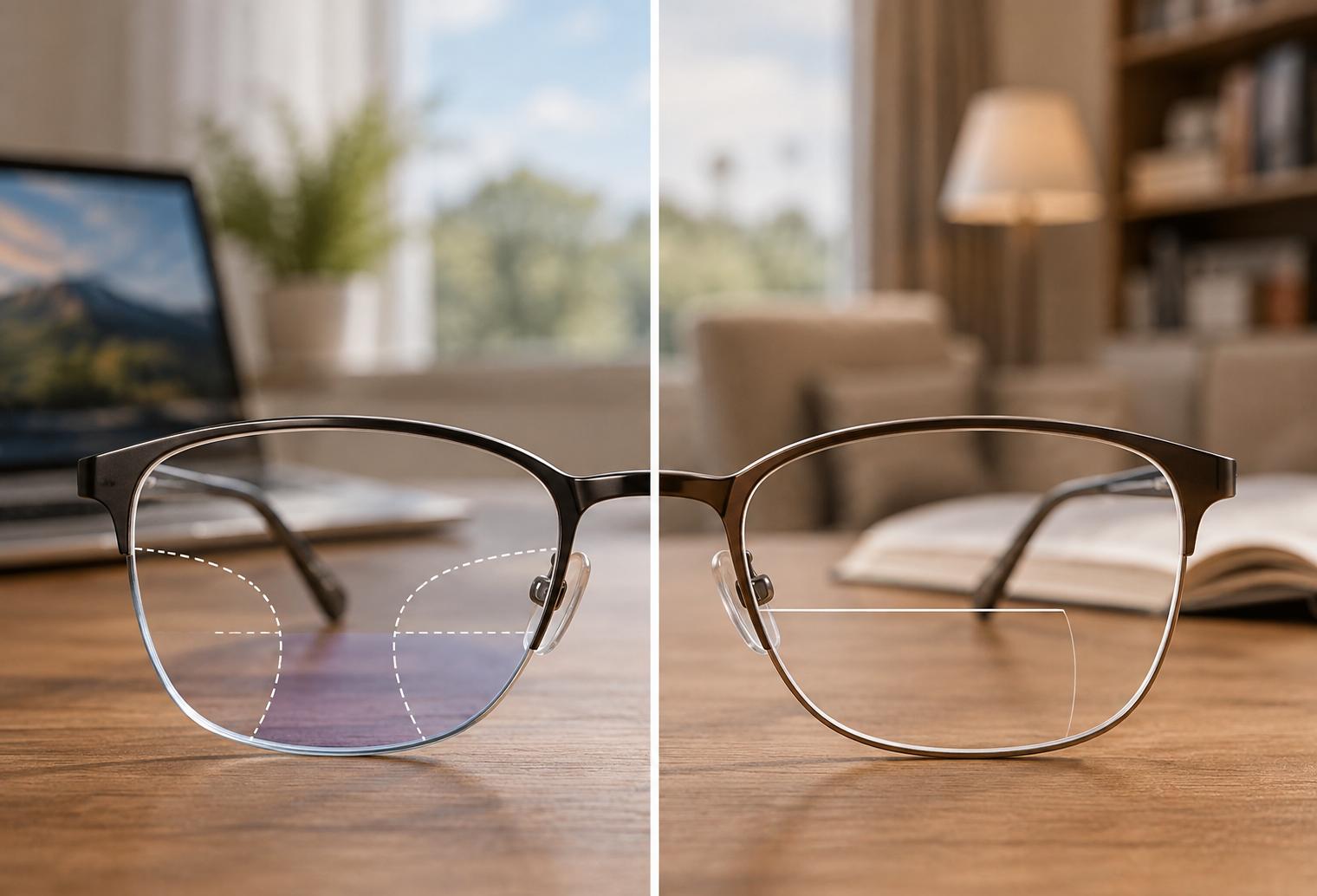
Progressive lenses provide a gradual change in prescription for distance, intermediate, and near vision without a visible dividing line. Bifocals use two distinct viewing areas, typically one for distance and another for near tasks. Both can help with presbyopia, the age-related loss of near focusing ability, but they provide noticeably different viewing experiences.
What Hammond Eyeglass Wearers Should Know
-
Progressive lenses provide multiple viewing distances with a gradual transition between powers.
-
Bifocals have separate distance and near-vision areas, usually divided by a visible line.
-
Progressive lenses can be especially useful when shifting between driving, computer work, and reading throughout the day.
-
Bifocals may appeal to Hammond residents who prefer clearly defined distance and reading zones.
-
Proper measurements and frame selection matter because the position of each viewing area affects how comfortably you use multifocal lenses.
Why Does the Difference Between Progressive Lenses and Bifocals Matter?
The difference between progressive lenses and bifocals matters because each design changes how you move between distance and near vision during everyday activities. Progressive lenses add an intermediate range between far and near vision, while traditional bifocals provide two distinct powers.
That distinction can become noticeable during a normal day around Tangipahoa Parish. Driving along I-12 or US 190 requires clear distance vision, while checking the dashboard involves an intermediate or closer viewing distance. At work, you may alternate between a computer screen, paperwork, and people across the room.
Tangi Vision Outlet helps local customers explore eyewear options based on their prescriptions and everyday visual needs. We can explain how different lens designs work and help you consider which option makes sense for your routine.
How Do Progressive Lenses Work?
Progressive lenses work by gradually changing lens power from the upper portion of the lens toward the lower portion, providing distance, intermediate, and near viewing areas. Unlike bifocals, there is no visible line separating those areas, so wearers move their gaze through different portions of the lens for different distances.
The intermediate zone is one of the biggest practical differences. It can be useful for computer screens, vehicle dashboards, store shelves, and other objects that are neither far away nor held at normal reading distance.
For someone who spends the morning working at a computer, drives across Hammond in the afternoon, and reads at home in the evening, that broader range can be convenient.
How Do Bifocals Work?
Bifocals work by placing two different lens powers in the same eyeglass lens, typically providing distance correction above and near correction below. The two areas have a defined transition rather than the gradual progression found in progressive lenses.
Looking straight ahead generally uses the distance portion. Looking downward through the reading segment allows the wearer to use the near prescription.
Some people appreciate this clearly defined separation because they know exactly where to look for close work. The tradeoff is that traditional bifocals do not provide the same gradual intermediate range available with progressives.
What Signs Suggest You May Need Multifocal Lenses?
Common signs that multifocal lenses may be worth discussing include increasing difficulty with close-up tasks while you still need clear vision at other distances. Presbyopia develops as the eye loses some of its ability to focus on nearby objects with age, making reading and other close work more difficult.
Signs can include:
-
Holding menus, books, or your phone farther away to see clearly
-
Needing more comfortable viewing for both near and distance tasks
-
Removing your current glasses to read
-
Switching frequently between reading glasses and distance glasses
-
Experiencing difficulty focusing on close print
-
Finding that computer distance falls awkwardly between your current viewing zones
-
Wanting one pair of glasses to cover more of your normal daily activities
A change in vision should not automatically be assumed to be presbyopia. Appropriate eye care can determine your prescription and whether another vision or eye-health issue needs attention.
Which Lens Is Better for Driving Around Hammond?
Progressive lenses may offer an advantage for drivers who want distance, intermediate, and near correction in one lens, while bifocals can still provide clear distance and close viewing zones. The right choice depends on your prescription, visual needs, previous eyewear experience, and comfort with each design.
Think about the range of distances involved during a drive through Hammond or toward Ponchatoula, Albany, or Robert. You may look far down the road, glance at the instrument panel, and read something closer after parking.
Progressives provide different powers across that range. Bifocals create a more distinct transition between far and near vision.
Any new multifocal lens can require some adjustment, so give yourself time to learn where the clearest viewing areas are before judging the new eyewear.
What Are the Most Common Reasons People Choose One Over the Other?
People commonly choose progressive lenses for their wider range of viewing distances and line-free appearance, while bifocals are often chosen for their distinct distance and reading areas. Neither design is automatically right for every eyeglass wearer.
Progressive lenses may make sense when:
You regularly use computers or other intermediate-distance objects, want one pair of glasses for several distances, or prefer lenses without a visible bifocal line.
Bifocals may make sense when:
Your primary needs are distance and close reading, you prefer a clearly defined near segment, or you are already comfortable using bifocals.
Daily habits matter. Someone working on a computer near Southeastern Louisiana University may have different visual demands than someone whose day consists primarily of driving and close paperwork.
How Can You Make Adjusting to New Multifocal Lenses Easier?
Adjusting to multifocal lenses is usually easier when you wear them consistently and learn to point your head and eyes toward the appropriate viewing zone. Progressive lenses in particular may feel different at first because different portions of the lens are designed for different distances.
Wear your new glasses as directed rather than constantly switching back to an older prescription. When looking at something, move your head naturally until you find the clearest area of the lens.
If something consistently seems wrong rather than simply unfamiliar, ask for help. Frame position, measurements, prescription details, and lens selection can all influence your experience.
What Mistakes Should Hammond Eyeglass Shoppers Avoid?
The biggest mistakes when comparing progressive lenses and bifocals are choosing based only on appearance or price and ignoring how the glasses will actually be used. Your normal viewing distances and daily routine should be central to the decision.
Mistake: Choosing progressives simply because they do not have a visible line.
Consequence: The lens design may not match your priorities.
Better approach: Consider your work, driving, reading, and computer habits first.
Mistake: Assuming bifocals and progressives provide the same viewing experience.
Consequence: You may be surprised by the intermediate range or transition between powers.
Better approach: Understand where each lens places distance, intermediate, and near correction.
Mistake: Giving up immediately on unfamiliar multifocal glasses.
Consequence: You may not allow enough time to become accustomed to using different lens zones.
Better approach: Follow the fitting guidance you receive and ask for assistance if problems persist.
A Common Hammond Scenario
A common local scenario is an adult who sees well enough at distance with prescription glasses but increasingly struggles with a phone, restaurant menu, paperwork, or computer screen. Switching glasses throughout the day becomes inconvenient, so multifocal lenses become worth considering.
Imagine commuting along I-12, working at a computer for several hours, stopping somewhere near downtown Hammond, and reading on your phone later that evening. Those tasks involve several viewing distances.
A bifocal could address far and near correction. A progressive lens could add a gradual intermediate range that may be useful for the computer and dashboard.
The best option depends on the individual prescription and how those glasses will actually be used.
What Eyewear Options Can Help With Presbyopia?
Eyewear options for presbyopia include reading glasses, bifocals, progressive lenses, and other forms of vision correction depending on the individual’s needs. The goal is to match correction to the distances that matter most in everyday life.
At Tangi Vision Outlet, we can help explain available eyewear choices and how lens and frame selection relate to your prescription and routine.
Progressive Lenses vs. Bifocals: Which Should You Choose?
Choose progressive lenses if you value a gradual range from distance through intermediate to near vision, while bifocals may be preferable if you want two clearly defined viewing areas. Your prescription, work environment, reading habits, driving needs, and previous experience with multifocal eyewear should guide the decision.
| Consideration | Progressive Lenses | Bifocals |
|---|---|---|
| Distance vision | Yes | Yes |
| Intermediate zone | Yes | Not a dedicated gradual zone |
| Near vision | Yes | Yes |
| Visible dividing line | No | Typically yes |
| Transition between powers | Gradual | Distinct |
| Computer-focused routines | Intermediate zone may help | May be less versatile for intermediate distance |
Rather than asking which design is universally better, ask which one better fits the distances you use most.
Where Can Local Residents Explore Their Eyewear Options?
Residents of Hammond and surrounding Tangipahoa Parish communities can compare lens options based on their individual prescriptions and everyday visual needs. People traveling from nearby Ponchatoula, Albany, Robert, or other parts of the Northshore region may have many of the same questions about choosing multifocal eyewear.
The important part is selecting glasses around your actual routine rather than simply choosing the lens type you have heard about most often.
What Happens If You Keep Struggling With the Wrong Eyewear?
Continuing to use eyewear that no longer meets your visual needs can make routine tasks unnecessarily difficult and may leave you frequently switching glasses or struggling at certain distances. Changes in vision also deserve appropriate evaluation rather than simply being dismissed as part of getting older.
If reading, computer work, or transitions between viewing distances have become frustrating, it may be time to revisit your prescription and eyewear choices.
Frequently Asked Questions About Progressive Lenses and Bifocals
Are progressive lenses better than bifocals?
Progressive lenses are not automatically better than bifocals, but they provide distance, intermediate, and near correction through a gradual change in lens power. Bifocals provide two distinct viewing zones. For Hammond wearers, the better choice depends on prescription needs, daily activities, and personal preference.
Do progressive lenses have a bifocal line?
No, progressive lenses do not have the visible dividing line associated with traditional bifocals. Their prescription changes gradually through different areas of the lens. This line-free design is one reason some Tangipahoa Parish eyeglass wearers prefer progressives, although appearance should not be the only factor in choosing lenses.
Can I use progressive lenses for computer work?
Yes, progressive lenses include an intermediate viewing area that can be useful for computer-distance tasks. The exact experience depends on the lens design, prescription, fitting, and working distance. Hammond residents who spend significant portions of the day at a computer should mention those habits when discussing eyewear options.
Are bifocals good for driving?
Bifocals can provide distance correction for looking at the road and a near segment for closer tasks. Because driving also involves intermediate-distance objects such as the dashboard, some Hammond drivers may prefer the broader range available from progressive lenses. Individual prescriptions and visual requirements should guide the choice.
Why do progressive lenses feel different at first?
Progressive lenses can feel different because lens power changes across the lens rather than switching between two fixed areas. Wearers need to learn which areas provide the clearest view at different distances. Consistent use can help with adaptation, while persistent difficulties should be discussed with an eye-care or eyewear professional.
Can I switch from bifocals to progressives?
Yes, many people can consider switching from bifocals to progressive lenses when their prescription and visual needs make progressives appropriate. The viewing experience will be different, so an adjustment period may be necessary. If you are considering a change in Hammond, discuss how you use your glasses throughout a typical day.
Do I need multifocal lenses just because close-up vision is getting blurry?
No, blurry near vision should not automatically be self-diagnosed as a need for multifocal lenses. Presbyopia commonly affects near focusing with age, but vision changes can have different causes. An appropriate vision assessment can identify your prescription needs and help determine which form of correction is suitable.
Where can I compare progressive lenses and bifocals in Hammond, LA?
Tangi Vision Outlet can help local eyewear shoppers understand the practical differences between progressive lenses and bifocals. We can discuss how lens options relate to your prescription, reading habits, computer use, driving, and other everyday visual demands so you can make a more informed eyewear choice.
Find a Better Fit for Your Everyday Vision in Hammond
Choosing between progressives and bifocals is easier when you focus on how you actually use your eyes throughout the day. Whether you are reading, working at a screen, driving around Tangipahoa Parish, or moving between all three, we can help you explore eyewear options designed around your prescription and routine.